

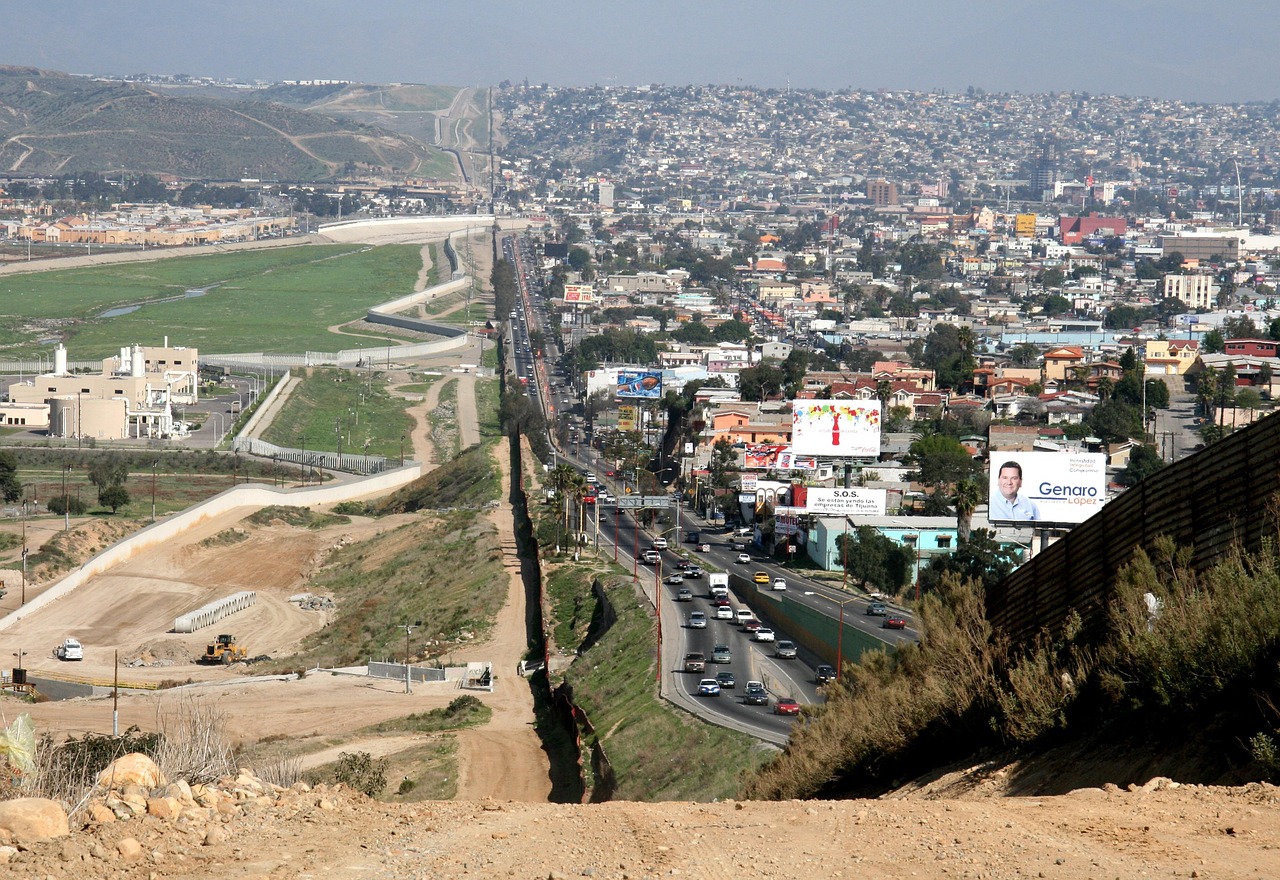
In 2026 the US-Mexico relationship is being pulled by three forces at once: tougher border management, a sharper security agenda focused on fentanyl and organised crime, and a trade pact that enters its first formal review. Each track has its own bureaucracy and politics. In practice they are starting to fuse, with consequences for migration routes, supply chains and diplomacy across the Americas.
The first change is procedural but important. The United States-Mexico-Canada Agreement faces its first six-year joint review on July 1, 2026, a built-in checkpoint that allows the three governments to renew, revise, or set the agreement on a path to expiry. The US Trade Representative has already begun the domestic run-up, including a public hearing process in December 2025.
For Mexico, the review lands at a moment when it is winning investment tied to nearshoring but also facing recurring US complaints on labour enforcement, energy policy and customs compliance. For the United States, the review creates leverage. It also creates uncertainty. Even without a formal renegotiation, companies that rely on North American supply chains have to plan for the possibility of tighter rules of origin enforcement, more inspections, or political threats that force last-minute operational changes.
Trade politics are already bleeding into public debate. Former US President Donald Trump said on January 13 that the United States did not need the agreement, a comment that underlines how quickly USMCA can become a campaign tool rather than a technical review.
The second change is at the border, where Washington is moving toward faster screening and higher rates of removal. A new DHS-DOJ asylum rule took effect at the end of December 2025. The published rationale emphasised security and public health grounds for barring asylum in certain cases. The operational effect is to widen the set of cases that can be rejected early, and to tighten the system at a time when the US domestic politics of migration remain volatile.
Mexico is under pressure to keep migrants from reaching the US line in the first place. A Congressional Research Service brief from September 2025 described Mexico’s migration control efforts as a central element of US border management, shaped heavily by US funding choices and oversight. The practical result in 2026 is likely to be more enforcement in southern Mexico, more detentions, and more bottling up of migrants inside Mexico’s territory.
That has an immediate regional effect. When Mexico expands enforcement in Chiapas and along key transit routes, the pressure shifts to Guatemala and further south. Migrants wait longer, take riskier routes, or remain stuck in border cities that lack services. Governments in Central America then face the political cost of hosting large transient populations, while also absorbing the criminal economies that grow around them.
The third change is security, and it is becoming harder to separate from migration and trade. Washington is insisting on measurable results against fentanyl trafficking and the groups that profit from it. In a call last week between Mexican Foreign Minister Juan Ramon de la Fuente and US Secretary of State Marco Rubio, the US side said incremental progress on border security was unacceptable and pushed for concrete and verifiable outcomes against trafficking networks and fentanyl flows.
Mexico, for its part, is trying to show co-operation without accepting any loss of sovereignty. The sensitivity has been visible even in routine military activity. President Claudia Sheinbaum on Monday said the United States provided written assurances after US military movements in the region raised concern in Mexico, and she defended a US military aircraft visit as an authorised training mission.
This tension will shape 2026. The US security establishment wants tighter co-operation on cartels and precursor chemicals. Parts of the US political system want more, including ideas that Mexico views as unacceptable. Mexico’s government needs US intelligence and equipment in some areas, but it also needs to demonstrate that Mexican territory is not open to foreign enforcement.
Fentanyl remains the core driver. A State Department determination in September 2025 credited Mexico with National Guard deployments and major seizures, while still describing the overall scale of the threat. US agencies also point to operational campaigns and interdiction work, but Washington’s language has shifted toward demanding outcomes rather than effort.
One effect is on migration diplomacy. Mexico becomes the de facto gatekeeper for the US border, which gives it leverage in trade and energy disputes. It also makes Mexico the target of political anger in the United States when crossings rise, regardless of the drivers in Venezuela, Haiti, Ecuador, or elsewhere. Central American governments, meanwhile, find themselves negotiating with Mexico as much as with Washington, because enforcement decisions in southern Mexico shape who moves north and who does not.
A second effect is on North American manufacturing. The 2026 USMCA review arrives as companies deepen cross-border production. Any move toward more aggressive verification, labour casework, or customs inspections will hit the auto corridor, electronics, and industrial components first. The politics of border security can also become a logistics problem.
A third effect is on public security across the Americas. Mexico’s focus on fentanyl and cartel networks shifts criminal behaviour. When one route is squeezed, trafficking groups test others, including maritime corridors and smaller border crossings, and they diversify into extortion and human smuggling. The US push for verifiable results increases pressure on Mexican forces to show arrests and seizures.
None of this requires a formal rupture. The more likely 2026 outcome is a relationship that stays operationally close but politically brittle. Trade officials will try to keep USMCA review work on schedule. Border agencies will try to cut processing times and raise removals. Security officials will press for more action on fentanyl and finances.
For the rest of the hemisphere, the practical implication is straightforward. When the United States tightens asylum and removal, and Mexico tightens transit enforcement, the burden shifts south. When Washington links security performance to the wider relationship, Mexico’s neighbours face stronger pressure to co-operate or absorb the fallout. When the USMCA review injects uncertainty into North American trade, investment decisions from the Caribbean to the Andes can be affected by where companies choose to build and ship.
The clearest marker in the calendar is July 1, when the USMCA joint review is scheduled to begin. By then, both governments will be judged on border numbers and fentanyl flows as much as on trade texts, and both will be making decisions that reach far beyond the line at the Rio Grande.