

Close Menu
Briefory
    What's Hot

    The Sovereignty of the Self in an Age of Algorithmic Governance

    13.02.2026

    The Chronos Strategy and the Death of the Always-On Executive Culture

    13.02.2026

    Direct Indexing and the Democratization of Tax-Loss Harvesting for High-Net-Worth Portfolios

    13.02.2026
    Facebook X (Twitter) Instagram
    Trending
    • The Sovereignty of the Self in an Age of Algorithmic Governance
    • The Chronos Strategy and the Death of the Always-On Executive Culture
    • Direct Indexing and the Democratization of Tax-Loss Harvesting for High-Net-Worth Portfolios
    • The Fragmentation Gamble and the Rise of Issue-Based Partnerships in the Global South
    • The Polycentric Shift and Why American Transactionalism is Redefining Global Power Dynamics in 2026
    • The Neuro-Symbolic Pivot and Why Pure Neural Networks are Reaching a Reasoning Ceiling
    • Trans-Arctic Cable Initiative Gains Momentum Amid Strategic Rivalry
    • Beyond Silicon and the Commercial Viability of Diamond-Based Power Electronics
    Facebook X (Twitter) Instagram
    BrieforyBriefory
    Sunday, April 19
    • World
      • Americas
      • Europe
      • Asia-Pacific
      • Africa
      • Middle East
    • Economy & Business
      • Global Economy
      • Real Estate
      • Startups
    • Finance & Markets
      • Stock Market
      • Crypto & Web3
      • Commodities
      • Forex
    • Health & Biohacking
      • Longevity
      • Mental Wellness
      • Medical Breakthroughs
    • Lifestyle & Luxury
      • High-End Travel
      • Sustainable Living
      • Work-Life Balance
    • Personal Finance
      • Global Tax & Equity
      • Retirement Planning
      • Wealth Management
    • Perspectives
      • Expert Briefings
      • Future Trends
      • Global Opinions
    • Tech & AI
      • Artificial Intelligence
      • Cyber Security
      • Future Tech
    • The Brief
      • Daily Briefings
      • Tech Radar
      • Deep Dives
    Briefory
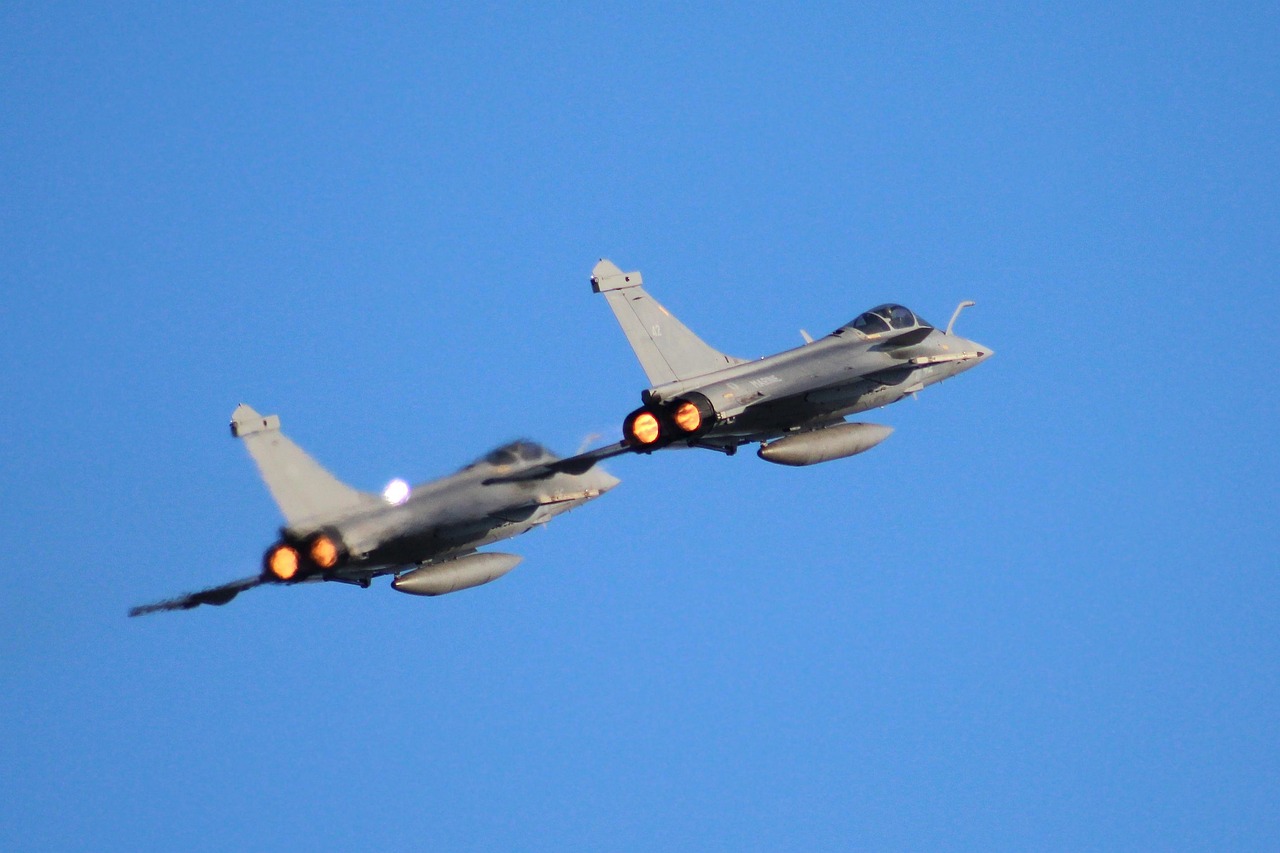
    NATO forces conduct exercises in Eastern Europe amid heightened security tensions.

    Eastern Europe moves to the front line of confrontation with Russia

    0
    By Newsroom on 26.01.2026 Europe, World
    Share
    Facebook Twitter LinkedIn Copy Link

    Eastern Europe has moved from the margins of global politics to its front line. What was once treated as a buffer zone between blocs is now a central arena of confrontation between Russia and the West, with consequences that extend far beyond the region itself and into the wider European security order.

    The war in Ukraine locked this shift in place. It ended any lingering belief that security in Eastern Europe could be managed through economic ties, energy dependence or diplomatic ambiguity. For countries along NATO’s eastern flank, the threat is no longer abstract or hypothetical. Defence planning, budget priorities and foreign policy choices are now organised around deterrence, resilience and preparation for prolonged confrontation.

    Poland is the clearest example of this transformation. It has embarked on one of the largest military build ups in Europe, sharply increasing defence spending, expanding the size of its armed forces and accelerating procurement of advanced weapons systems. Warsaw no longer treats Berlin or Paris as its primary security anchors. Washington has assumed that role, with Britain close behind. This strategic reorientation is reshaping internal dynamics within the European Union and NATO, shifting influence eastward.

    The Baltic states moved earlier and with fewer illusions. Estonia, Latvia and Lithuania see Russia not as a distant or cyclical risk but as an existential one. Their policies are built around constant readiness, tight operational integration with NATO forces and sustained pressure on allies to maintain sanctions and military support for Ukraine. For these countries, compromise with Moscow is not viewed as a diplomatic option. It is seen as a pathway to vulnerability.

    Further south, the picture becomes more uneven. Romania has emerged as a critical NATO hub in the Black Sea region, hosting allied forces, logistics nodes and infrastructure central to alliance planning. Bulgaria and Hungary have taken more cautious or ambivalent approaches, shaped by domestic political divisions, energy exposure and economic ties. This divergence complicates Western efforts to present a unified front and exposes fault lines inside the alliance.

    Russia’s objectives in Eastern Europe have also hardened. Moscow is no longer pursuing influence through economic integration or partnership frameworks. Its strategy now relies on pressure, intimidation and the use of military force to enforce red lines. The aim is to limit NATO’s reach, weaken Western cohesion and retain leverage over neighbouring states it still views as part of its security perimeter.

    This has revived dynamics reminiscent of the Cold War, but without many of its stabilising features. There are no agreed rules, no recognised spheres of influence and few reliable crisis management channels. Hybrid tactics dominate the landscape. Cyber operations, disinformation campaigns, energy pressure and political interference operate alongside conventional military threats. Eastern Europe bears the brunt of these tactics first.

    Energy has been one of the most powerful instruments. The collapse of Russian gas exports to much of Europe forced Eastern European states to accelerate diversification efforts. LNG terminals, interconnectors and nuclear projects moved from long term planning to urgent execution. While this has reduced Moscow’s leverage, it has come at a significant economic cost, particularly for lower income countries facing higher prices and fiscal strain.

    Economic pressures are adding to the strain. Eastern Europe has benefited from industrial relocation, defence related investment and tighter integration into Western supply chains. At the same time, it faces higher inflation, tight labour markets and heavy public spending demands. Support for Ukraine and rearmament competes directly with social programmes and infrastructure needs. Governments must justify these trade offs to electorates already under pressure.

    China adds another layer of complexity. Beijing has scaled back its visible engagement in Eastern Europe, particularly after the collapse of its regional investment platform. Yet it remains an economic presence and a diplomatic variable. Some governments see China as a potential hedge against over dependence on Western partners. Others view it as a security risk that could undermine alignment. This ambiguity fuels internal tension and complicates policy coordination.

    The United States remains the decisive external actor. Its troops, intelligence capabilities and political backing underpin Eastern Europe’s security posture. This dependence is widely accepted, but it also creates vulnerability. Any signal of wavering US commitment, whether real or perceived, reverberates quickly through the region. European efforts to build autonomous defence capacity continue, but progress remains slow and uneven.

    Eastern Europe is no longer a passive space shaped by decisions made elsewhere. It is actively shaping the agenda. Governments across the region push for harder lines on Russia, stricter sanctions enforcement and sustained military aid to Ukraine. This has shifted the centre of gravity within NATO and the EU, sometimes clashing with countries that prioritise stability, economic ties or negotiation.

    The risk ahead is entrenchment. As positions harden, the space for de escalation narrows. Eastern Europe is likely to live with higher militarisation, persistent tension and economic strain for years. The region has chosen security over ambiguity, accepting the costs as the price of survival.

    The new cold war is not global in the old sense. It is concentrated, asymmetric and unstable. Eastern Europe sits at its core, not as a proxy, but as a principal actor whose decisions now shape the security architecture of the continent.

    Keep Reading

    Thailand Advances Land Bridge Plan as Alternative to Malacca Strait

    The Archipelagic Pivot and the Quiet Realignment of the Indo-Pacific

    Africa’s Silicon Savannah and the shift beyond traditional banking

    Asia for Asia and the reshaping of the global economic centre

    Constraint, not innovation, will decide which industries dominate the next decade

    Postwar globalisation gives way to a narrower and more political system

    Leave A Reply Cancel Reply

    Latest Posts
    Advertisement
    Demo

    Recent Posts

    • The Sovereignty of the Self in an Age of Algorithmic Governance
    • The Chronos Strategy and the Death of the Always-On Executive Culture
    • Direct Indexing and the Democratization of Tax-Loss Harvesting for High-Net-Worth Portfolios
    • The Fragmentation Gamble and the Rise of Issue-Based Partnerships in the Global South
    • The Polycentric Shift and Why American Transactionalism is Redefining Global Power Dynamics in 2026
    Facebook X (Twitter) WhatsApp TikTok Instagram

    News

    • World News
    • Politics
    • Business
    • Technology

    Company

    • Privacy & Policy
    • Editorial Policy
    • Copyright & DMCA Policy
    • Terms of Use

    Contact

    • Contact
    • About Briefory

    Stay Informed. Stay Briefed.

    Essential global news, carefully selected and delivered by Briefory

    © 2026 Briefory.com Designed & Developed by lv8 – Consulting.
    • Privacy Policy
    • Terms
    • Copyright & DMCA Policy

    Type above and press Enter to search. Press Esc to cancel.

    Your privacy settings

    We and our partners use information collected through cookies and similar technologies to improve your experience on our site, analyse how you use it and for marketing purposes. Because we respect your right to privacy, you can choose not to allow some types of cookies. However, blocking some types of cookies may impact your experience of the site and the services we are able to offer. In some cases, data obtained from cookies is shared with third parties for analytics or marketing reasons. You can exercise your right to opt-out of that sharing at any time by disabling cookies.
    Privacy Policy

    Manage Consent Preferences

    Necessary

    Always ON
    These cookies and scripts are necessary for the website to function and cannot be switched off. They are usually only set in response to actions made by you which amount to a request for services, suchas setting your privacy preferences, logging in or filling in forms. You can set your browser to block oralert you about these cookies, but some parts of the site will not then work. These cookies do not store any personally identifiable information.

    Analytics

    These cookies and scripts allow us to count visits and traffic sources, so we can measure and improve the performance of our site. They help us know which pages are the most and least popular and see how visitors move around the site. All information these cookies collect is aggregated and therefore anonymous. If you do not allow these cookies and scripts, we will not know when you have visited our site.

    Embedded Videos

    These cookies and scripts may be set through our site by external video hosting services likeYouTube or Vimeo. They may be used to deliver video content on our website. It’s possible for the video provider to build a profile of your interests and show you relevant adverts on this or other websites. They do not store directly personal information, but are based on uniquely identifying your browser and internet device. If you do not allow these cookies or scripts it is possible that embedded video will not function as expected.

    Google Fonts

    Google Fonts is a font embedding service library. Google Fonts are stored on Google's CDN. The Google Fonts API is designed to limit the collection, storage, and use of end-user data to only what is needed to serve fonts efficiently. Use of Google Fonts API is unauthenticated. No cookies are sent by website visitors to the Google Fonts API. Requests to the Google Fonts API are made to resource-specific domains, such as fonts.googleapis.com or fonts.gstatic.com. This means your font requests are separate from and don't contain any credentials you send to google.com while using other Google services that are authenticated, such as Gmail.

    Marketing

    These cookies and scripts may be set through our site by our advertising partners. They may be used by those companies to build a profile of your interests and show you relevant adverts on other sites. They do not store directly personal information, but are based on uniquely identifying your browser and internet device. If you do not allow these cookies and scripts, you will experience less targeted advertising.
    Disable all Confirm my choices Allow all
    Verified by ConsentMagic
    My Consent Preferences