


Close Menu
Briefory
    What's Hot

    The Sovereignty of the Self in an Age of Algorithmic Governance

    13.02.2026

    The Chronos Strategy and the Death of the Always-On Executive Culture

    13.02.2026

    Direct Indexing and the Democratization of Tax-Loss Harvesting for High-Net-Worth Portfolios

    13.02.2026
    Facebook X (Twitter) Instagram
    Trending
    • The Sovereignty of the Self in an Age of Algorithmic Governance
    • The Chronos Strategy and the Death of the Always-On Executive Culture
    • Direct Indexing and the Democratization of Tax-Loss Harvesting for High-Net-Worth Portfolios
    • The Fragmentation Gamble and the Rise of Issue-Based Partnerships in the Global South
    • The Polycentric Shift and Why American Transactionalism is Redefining Global Power Dynamics in 2026
    • The Neuro-Symbolic Pivot and Why Pure Neural Networks are Reaching a Reasoning Ceiling
    • Trans-Arctic Cable Initiative Gains Momentum Amid Strategic Rivalry
    • Beyond Silicon and the Commercial Viability of Diamond-Based Power Electronics
    Facebook X (Twitter) Instagram
    BrieforyBriefory
    Sunday, April 19
    • World
      • Americas
      • Europe
      • Asia-Pacific
      • Africa
      • Middle East
    • Economy & Business
      • Global Economy
      • Real Estate
      • Startups
    • Finance & Markets
      • Stock Market
      • Crypto & Web3
      • Commodities
      • Forex
    • Health & Biohacking
      • Longevity
      • Mental Wellness
      • Medical Breakthroughs
    • Lifestyle & Luxury
      • High-End Travel
      • Sustainable Living
      • Work-Life Balance
    • Personal Finance
      • Global Tax & Equity
      • Retirement Planning
      • Wealth Management
    • Perspectives
      • Expert Briefings
      • Future Trends
      • Global Opinions
    • Tech & AI
      • Artificial Intelligence
      • Cyber Security
      • Future Tech
    • The Brief
      • Daily Briefings
      • Tech Radar
      • Deep Dives
    Briefory
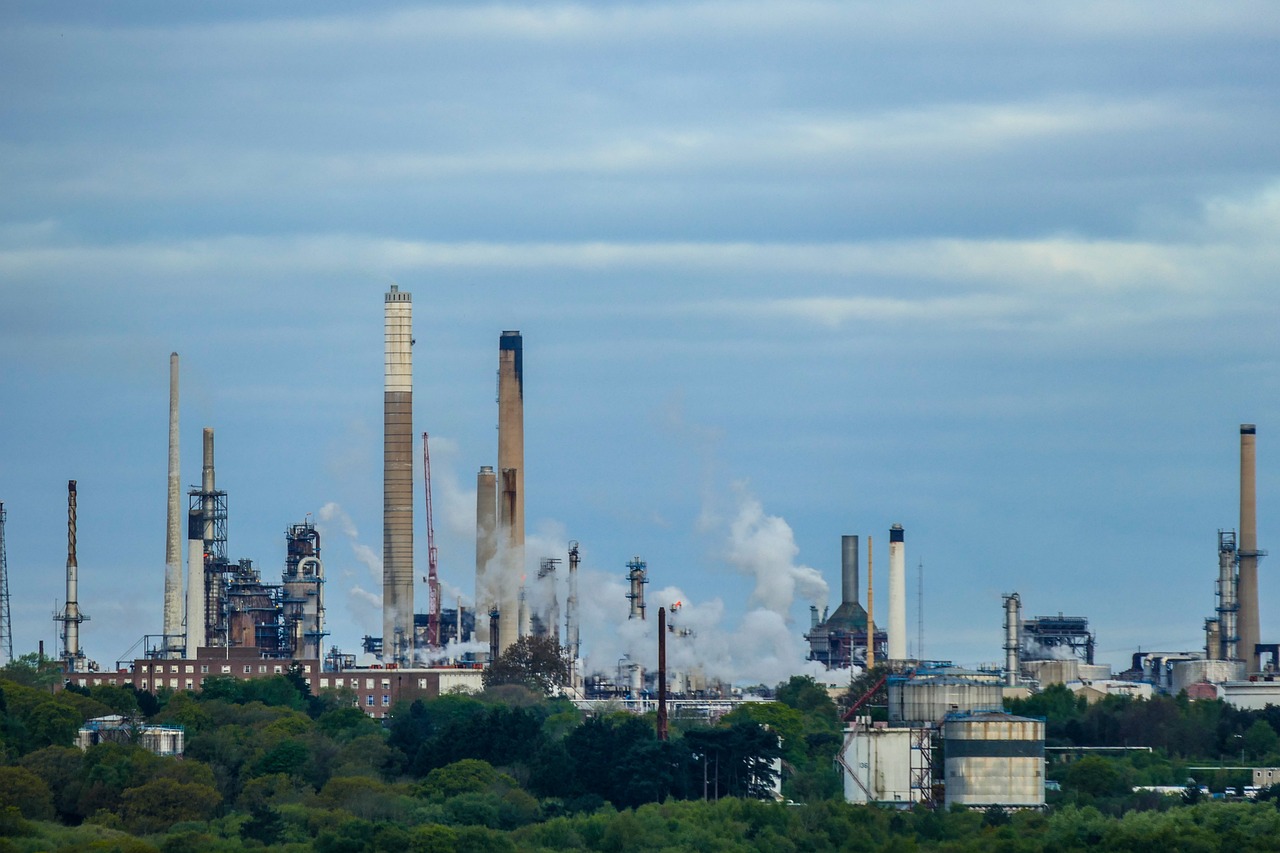
    Energy infrastructure in the Gulf highlights its continued role in a more competitive global market.

    Gulf states lose monopoly power as global energy control fragments

    0
    By Newsroom on 26.01.2026 Middle East, World
    Share
    Facebook Twitter LinkedIn Copy Link

    The Gulf states are no longer the uncontested centre of gravity of the global energy system. Oil and gas still matter, and the Gulf still supplies them at scale. What has changed is power. Control has become shared, conditional, and increasingly constrained by forces beyond the region’s ability to manage alone.

    For decades, Gulf influence rested on three pillars. Low cost production gave producers resilience across price cycles. Spare capacity allowed rapid intervention in moments of shortage. Coordinated action, often through OPEC, gave the region the ability to shape markets and expectations. Those advantages remain real, but they no longer translate into monopoly influence.

    The first constraint is demand. Global oil consumption is still rising, but more slowly and less predictably than in the past. China, once the main engine of incremental demand, is seeing structural changes driven by slower growth, electrification, and efficiency gains. In advanced economies, oil intensity is declining as transport, industry, and power generation adapt. Long term demand projections have flattened. This does not remove oil’s importance, but it shifts leverage toward consumers, particularly in periods of economic weakness.

    The second constraint is competition. The United States has become the world’s largest oil producer, altering market dynamics in a lasting way. Shale output is flexible, commercially driven, and responsive to price signals. It does not match Gulf production in cost or scale, but it caps price spikes and shortens cycles. When prices rise, US supply responds faster than traditional producers. This limits how far exporters can push markets without triggering countervailing supply.

    Other producers also matter more than before. Brazil, Guyana, Canada, and Norway are expanding output steadily. None rivals the Gulf alone. Together, they dilute concentration and reduce dependence on any single region. The market is more diversified geographically and politically than it was a decade ago.

    OPEC remains an important actor, but its internal balance has shifted. Cohesion is weaker. Production cuts are harder to enforce. Fiscal needs vary sharply among members. Saudi Arabia carries most of the burden of restraint, absorbing lost revenue to stabilise prices. Others struggle to comply or quietly benefit from higher prices without cutting output. This dynamic makes market management less predictable and increases volatility.

    Consumer behaviour has also changed. Energy security now outweighs price optimisation for many importers. After repeated shocks, governments prioritise diversification, storage, and domestic resilience. Europe’s rapid move away from Russian gas reinforced this mindset and extended it to oil and LNG. Long term contracts, alternative suppliers, and infrastructure investment have become strategic tools rather than purely commercial choices.

    Technology is accelerating the shift. Electric vehicles, renewable power, and battery storage are expanding faster than expected in several major markets. Oil’s role in power generation continues to shrink. Transport remains the core pillar of demand, but substitution is under way there as well. The transition is gradual, but direction matters. Expectations about future demand increasingly shape investment decisions today.

    The Gulf states are not passive in the face of these changes. Their response is adaptation rather than retreat. Saudi Arabia, the United Arab Emirates, and others are investing heavily in downstream assets, petrochemicals, trading, and logistics. The aim is to control more of the value chain, from production to processing and distribution, and to capture margins beyond upstream extraction.

    Gas and LNG play a growing role in this strategy. As coal declines and renewables expand unevenly, gas is positioned as a transitional fuel. Gulf producers see LNG as a way to remain central to energy markets during the transition, even as oil demand growth slows.

    At the same time, governments are hedging against long term decline in energy rents. Large scale investment plans target tourism, finance, manufacturing, and technology. These diversification strategies vary in credibility and execution, but they reflect a shared recognition that oil alone cannot anchor economic and political power indefinitely.

    Geopolitics adds another layer of constraint. The United States remains a key security partner, but the relationship is more transactional and less automatic. China has become the largest customer for Gulf energy, but it avoids security commitments and political alignment. Europe wants reliable supply while imposing climate related conditions. The Gulf can no longer rely on a single external anchor. It must balance among competing interests with fewer guarantees.

    This balancing act narrows room for manoeuvre. Using oil as a political tool now carries higher cost. Market reactions are faster. Alternatives are more available. Unilateral moves risk accelerating diversification rather than enforcing compliance. Influence has become more conditional and more exposed to unintended consequences.

    None of this means the Gulf is losing relevance. It remains central to global energy supply, spare capacity, and price formation. Its production costs are among the lowest in the world. Its reserves are vast. What has ended is the era of near exclusive control.

    The shift does not produce a vacuum. It produces a more competitive and fragmented energy order. Power is distributed across producers, technologies, and consumers. In that system, the Gulf states remain major players. They are no longer the only ones who matter, and their influence now depends as much on adaptation and strategy as on geology.

    Keep Reading

    Thailand Advances Land Bridge Plan as Alternative to Malacca Strait

    The Archipelagic Pivot and the Quiet Realignment of the Indo-Pacific

    Africa’s Silicon Savannah and the shift beyond traditional banking

    Asia for Asia and the reshaping of the global economic centre

    Constraint, not innovation, will decide which industries dominate the next decade

    Postwar globalisation gives way to a narrower and more political system

    Leave A Reply Cancel Reply

    Latest Posts
    Advertisement
    Demo

    Recent Posts

    • The Sovereignty of the Self in an Age of Algorithmic Governance
    • The Chronos Strategy and the Death of the Always-On Executive Culture
    • Direct Indexing and the Democratization of Tax-Loss Harvesting for High-Net-Worth Portfolios
    • The Fragmentation Gamble and the Rise of Issue-Based Partnerships in the Global South
    • The Polycentric Shift and Why American Transactionalism is Redefining Global Power Dynamics in 2026
    Facebook X (Twitter) WhatsApp TikTok Instagram

    News

    • World News
    • Politics
    • Business
    • Technology

    Company

    • Privacy & Policy
    • Editorial Policy
    • Copyright & DMCA Policy
    • Terms of Use

    Contact

    • Contact
    • About Briefory

    Stay Informed. Stay Briefed.

    Essential global news, carefully selected and delivered by Briefory

    © 2026 Briefory.com Designed & Developed by lv8 – Consulting.
    • Privacy Policy
    • Terms
    • Copyright & DMCA Policy

    Type above and press Enter to search. Press Esc to cancel.

    Your privacy settings

    We and our partners use information collected through cookies and similar technologies to improve your experience on our site, analyse how you use it and for marketing purposes. Because we respect your right to privacy, you can choose not to allow some types of cookies. However, blocking some types of cookies may impact your experience of the site and the services we are able to offer. In some cases, data obtained from cookies is shared with third parties for analytics or marketing reasons. You can exercise your right to opt-out of that sharing at any time by disabling cookies.
    Privacy Policy

    Manage Consent Preferences

    Necessary

    Always ON
    These cookies and scripts are necessary for the website to function and cannot be switched off. They are usually only set in response to actions made by you which amount to a request for services, suchas setting your privacy preferences, logging in or filling in forms. You can set your browser to block oralert you about these cookies, but some parts of the site will not then work. These cookies do not store any personally identifiable information.

    Analytics

    These cookies and scripts allow us to count visits and traffic sources, so we can measure and improve the performance of our site. They help us know which pages are the most and least popular and see how visitors move around the site. All information these cookies collect is aggregated and therefore anonymous. If you do not allow these cookies and scripts, we will not know when you have visited our site.

    Embedded Videos

    These cookies and scripts may be set through our site by external video hosting services likeYouTube or Vimeo. They may be used to deliver video content on our website. It’s possible for the video provider to build a profile of your interests and show you relevant adverts on this or other websites. They do not store directly personal information, but are based on uniquely identifying your browser and internet device. If you do not allow these cookies or scripts it is possible that embedded video will not function as expected.

    Google Fonts

    Google Fonts is a font embedding service library. Google Fonts are stored on Google's CDN. The Google Fonts API is designed to limit the collection, storage, and use of end-user data to only what is needed to serve fonts efficiently. Use of Google Fonts API is unauthenticated. No cookies are sent by website visitors to the Google Fonts API. Requests to the Google Fonts API are made to resource-specific domains, such as fonts.googleapis.com or fonts.gstatic.com. This means your font requests are separate from and don't contain any credentials you send to google.com while using other Google services that are authenticated, such as Gmail.

    Marketing

    These cookies and scripts may be set through our site by our advertising partners. They may be used by those companies to build a profile of your interests and show you relevant adverts on other sites. They do not store directly personal information, but are based on uniquely identifying your browser and internet device. If you do not allow these cookies and scripts, you will experience less targeted advertising.
    Disable all Confirm my choices Allow all
    Verified by ConsentMagic
    My Consent Preferences