


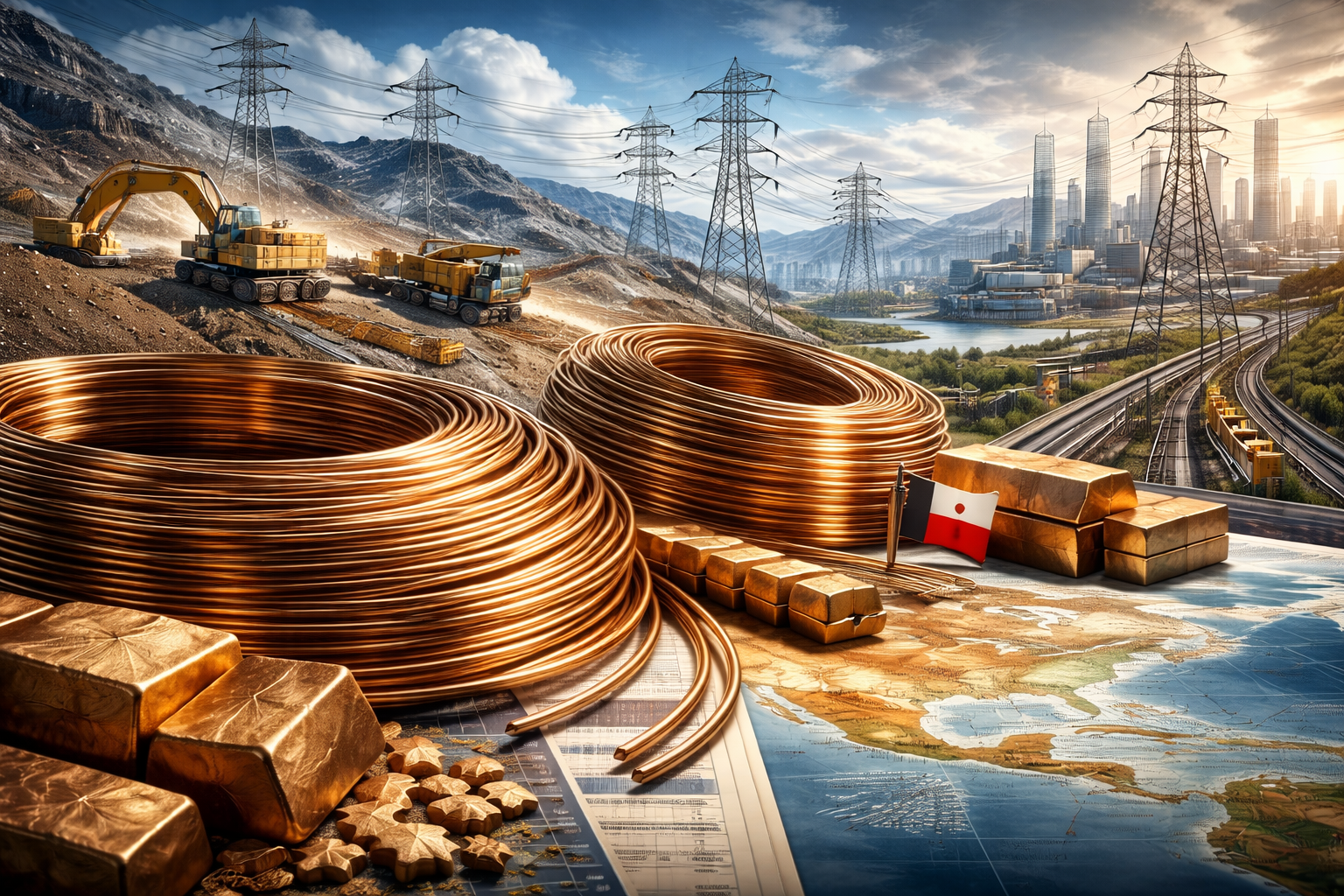
Copper has always sat quietly at the centre of industrial progress. It carries electricity, anchors construction, and connects machines that otherwise remain inert. Because it is familiar, it is often treated as background. That is changing. As governments and utilities push to expand and modernise electric grids, copper is moving from a supporting role into a point of constraint.
The pressure comes from direction rather than speed. The global shift toward electrification is not confined to renewable generation. It extends through transmission lines, charging infrastructure, data centres, and urban distribution networks that were built for a different era. Each layer adds demand. Together they create a pull on copper supply that is proving difficult to meet.
Mining responds slowly to price signals. New copper projects take years to permit, finance, and develop. Existing mines face declining ore grades, higher costs, and growing social resistance. Environmental scrutiny has intensified. Water use, land access, and community consent now shape production as much as geology. Even where resources exist, extraction is no longer a purely technical decision.
This has geopolitical consequences. Copper production is concentrated in a small number of countries, with Chile and Peru playing an outsized role. Political instability, regulatory uncertainty, and labour disputes in these regions ripple quickly through global markets. Import dependent economies feel exposed. What was once a trade issue begins to resemble a strategic vulnerability.
China sits at the centre of this dynamic. It is both the largest consumer of copper and a dominant player in refining capacity. Its investments in overseas mines and processing facilities have been framed as commercial. They also function as insurance. Securing supply reduces exposure to future bottlenecks. Other nations are beginning to draw similar conclusions, though they arrive later and with fewer tools.
The electric grid upgrade sharpens the stakes. Unlike consumer electronics, grids cannot easily substitute materials without redesign. Aluminium can replace copper in some applications, but not all, and often with trade offs in efficiency or durability. Retrofitting existing systems is costly. Delays compound. A shortage of copper does not halt electrification, but it slows it and raises its price.
Markets reflect this tension imperfectly. Prices rise, but volatility remains. Investors weigh long term demand against near term cycles. Recycling offers some relief, yet scrap supply grows slowly and depends on past consumption patterns. Secondary supply cannot bridge the gap alone.
There is also a political lag. Grid investment is often announced with ambition but delivered through fragmented local processes. Permitting delays, budget constraints, and coordination failures stretch timelines. Copper demand does not arrive evenly. It spikes as projects finally break ground. Supply struggles to respond in kind.
In some countries, this friction is already visible. Utilities report longer lead times. Contractors adjust designs to accommodate material availability rather than engineering preference. These are small signals, but they accumulate. They suggest that the energy transition is becoming as much a logistics challenge as a technological one.
The risk is not a single crisis, but a series of quiet compromises. Grid upgrades proceed, but slower than planned. Costs rise, but are absorbed gradually through tariffs or public debt. Political support erodes at the margins. None of this makes headlines on its own. Together it shapes outcomes.
Copper does not command the attention of oil or gas. It does not move armies or dominate diplomacy in the same way. Yet it underpins the systems that modern economies are trying to rebuild. As electrification deepens, control over copper supply will matter more. Not as leverage in isolation, but as part of a broader contest over industrial capacity and resilience.
The supply crunch may ease over time. Higher prices will draw investment. Technology may reduce intensity at the margins. But the lesson is already clear. Materials once treated as neutral inputs are becoming strategic variables. The electric grid upgrade is exposing that reality, quietly and persistently.