


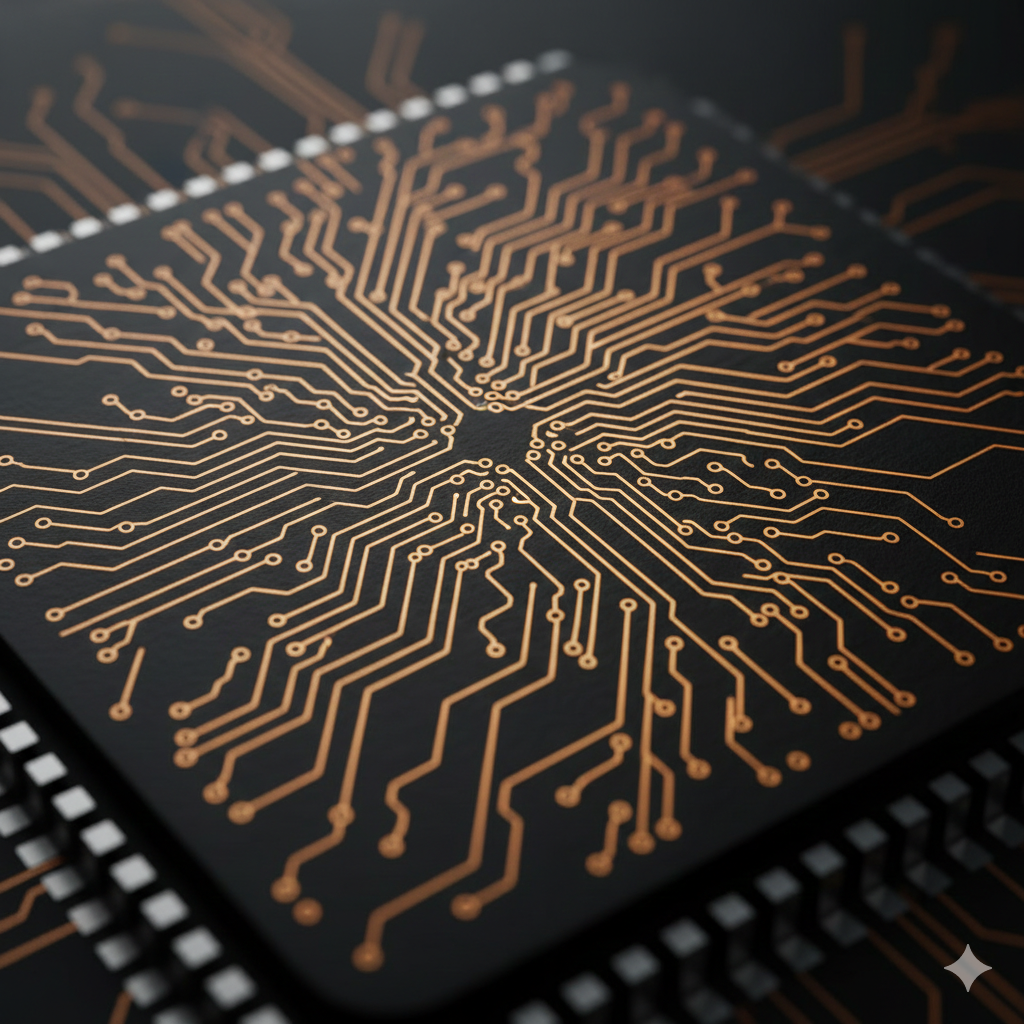
The limits of Von Neumann architecture are no longer a theoretical concern confined to academic debate. They have become a practical constraint shaping the future of computation. As the energy demands of large-scale artificial intelligence models and real-time processing systems continue to rise, the industry is approaching physical and economic ceilings that incremental improvements can no longer resolve. In response, a quiet but decisive shift is taking place within the research divisions of the world’s leading semiconductor firms. The emphasis is moving away from transistor density alone toward a more fundamental redesign of how computation itself is performed.
At the center of this transition is neuromorphic computing. Rather than separating memory and processing into distinct components, neuromorphic architectures integrate the two, allowing data to be processed where it is stored. This approach dramatically reduces energy loss caused by constant data movement, which has become one of the dominant inefficiencies in modern computing systems. By operating through event-driven signaling instead of continuous clock cycles, these systems more closely resemble biological neural processes. Early experimental deployments indicate that for specific workloads, such as pattern recognition and sensory data interpretation, neuromorphic chips can achieve orders-of-magnitude improvements in energy efficiency compared with conventional GPU-based systems.
The strategic relevance of this shift extends well beyond performance metrics. Computing is steadily migrating away from centralized data centers toward distributed intelligence at the edge. In such an environment, the ability to process information locally, with minimal power consumption and low latency, becomes a critical differentiator. Autonomous vehicles, medical implants, industrial sensors, and defense systems all benefit from hardware capable of interpreting complex environments without reliance on continuous cloud connectivity. For military and security planners, low-power, self-contained processing systems offer resilience advantages that energy-intensive centralized architectures cannot provide.
Despite this momentum, widespread adoption remains constrained by software compatibility rather than hardware feasibility. The global software ecosystem has been built over decades around deterministic, binary logic and sequential execution models. Neuromorphic systems operate on fundamentally different principles, processing information as temporal signals rather than fixed instructions. As a result, much of the existing software base cannot be directly adapted. This incompatibility signals the beginning of a prolonged transition toward new programming paradigms that emphasize probability, timing, and adaptive behavior. The effort resembles less a routine software upgrade and more a generational rewrite of how computation is conceptualized.
From a geopolitical standpoint, neuromorphic computing is reshaping competitive dynamics within the semiconductor landscape. Several countries that lagged in traditional chip manufacturing are now investing aggressively in alternative architectures that bypass some of the most capital-intensive stages of silicon production. Because neuromorphic systems rely less on extreme lithography and more on architectural innovation, they offer potential entry points for new players seeking to leapfrog established manufacturing hierarchies. Over time, this could redistribute influence across the global semiconductor supply chain.
For enterprises, the implications are long-term rather than immediate. Neuromorphic chips are unlikely to replace general-purpose data center hardware in the near term. Their value lies in specialized, high-impact use cases where power efficiency, latency, and autonomy outweigh raw computational throughput. Organizations that begin experimenting with these systems now, integrating them into targeted workflows, position themselves to capture meaningful advantages over the next decade. The transition will be gradual, but its direction is clear.
The broader trajectory suggests a structural shift in computing priorities. The era of brute-force scaling through ever-larger clusters is approaching its limits. In its place, a new phase is emerging, defined by architectures that favor efficiency, adaptability, and intelligent design over sheer processing power. Neuromorphic computing represents not a marginal improvement, but a rethinking of computation itself. For those shaping long-term technology strategy, this shift warrants close attention, not as a speculative concept, but as an early signal of the next foundational layer of the digital economy.