

The rapid expansion of generative artificial intelligence is encountering a constraint that cannot be solved through software optimization or financial investment alone. Energy availability is emerging as the primary limiting factor for the next phase of AI growth, reshaping how digital infrastructure is planned, financed, and deployed worldwide.
For more than a decade, advances in artificial intelligence were driven by increased computational scale. Larger models, denser data centers, and specialized accelerators enabled exponential gains in capability. That trajectory is now confronting physical limits. The power requirements of modern AI chips continue to rise, placing unprecedented strain on electrical grids and cooling systems that were not designed to support sustained high density workloads.
During the first half of 2026, multiple large data center developments in major technology regions were postponed or redesigned after utilities signaled insufficient grid capacity. In several cases, approvals for new high load connections were delayed indefinitely. These disruptions have highlighted a growing gap between the pace of AI deployment and the ability of existing infrastructure to support it.
As a result, sustainability has shifted from a long term policy objective to an immediate engineering requirement. Data center operators are increasingly prioritizing efficiency over scale, investing in liquid cooling technologies and advanced thermal management systems as air cooling reaches its practical limits. At the same time, on site power generation and storage solutions are gaining prominence as companies seek to reduce reliance on overstretched public grids.
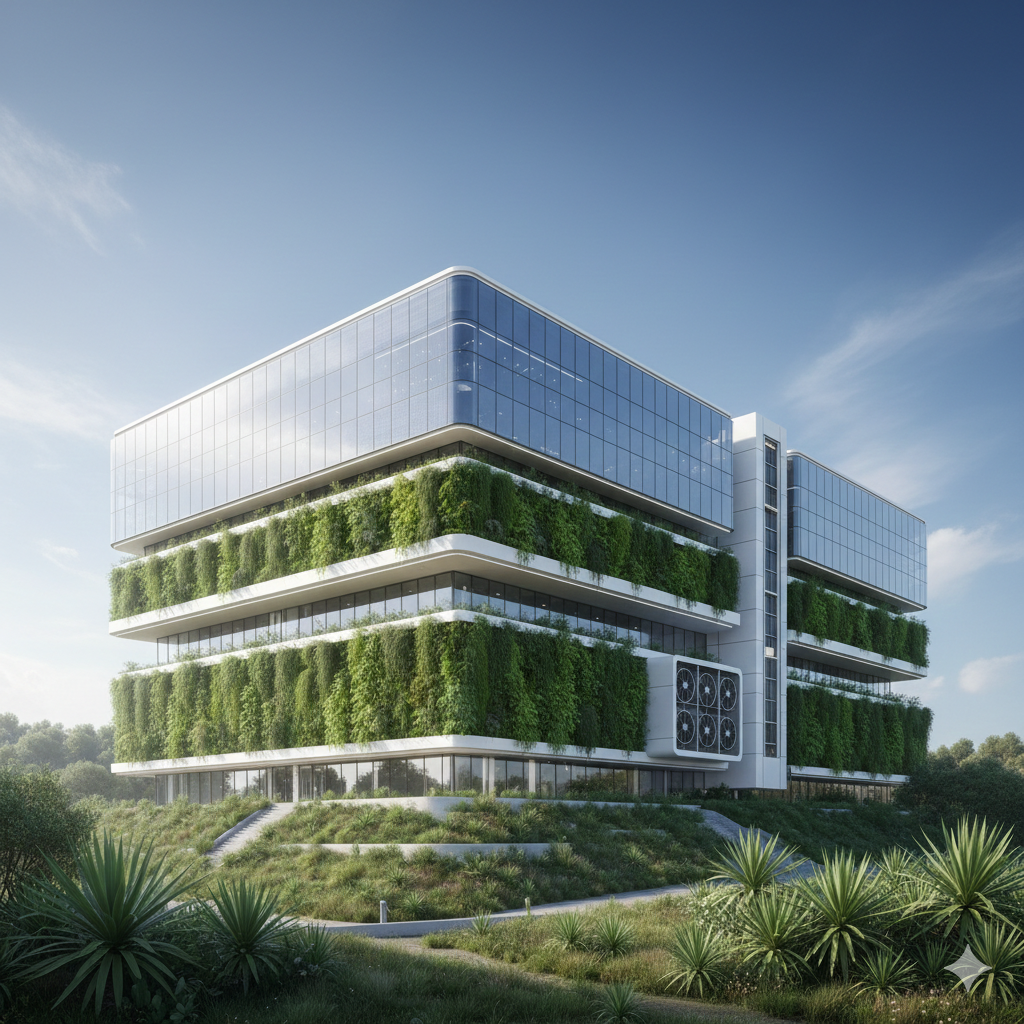
The design philosophy of data centers is also changing. New facilities are increasingly conceived as integrated energy systems rather than standalone compute hubs. Waste heat generated by AI workloads is being captured and redirected into district heating networks or industrial processes. In urban areas, this approach is reframing data centers as contributors to local infrastructure rather than passive energy consumers.
These developments are altering the competitive landscape of the technology sector. The ability to secure a stable and efficient energy supply is becoming as critical as access to advanced chips or proprietary algorithms. Organizations that can achieve higher compute output per unit of power are gaining a structural advantage, while those operating energy intensive legacy facilities face rising operational and regulatory risk.
There is also a gradual shift away from large centralized campuses toward more distributed architectures. Smaller modular data centers located closer to users are being designed to operate entirely on renewable energy from inception. This distributed model reduces transmission losses, improves resilience, and allows capacity to scale in alignment with local energy availability.
Financial markets are responding to this shift. Sustainability linked financing instruments, including Green Compute bonds, are becoming a key source of capital for infrastructure expansion. Investors are increasingly evaluating data center projects based on long term energy independence and regulatory exposure. In an environment of volatile energy prices and tightening emissions standards, inefficient power profiles are now viewed as a form of technical debt.
The transition is also influencing software development practices. Energy consumption is becoming a measurable performance metric alongside latency and throughput. Developers are being encouraged to consider the power cost of training and inference workloads, and new tooling is emerging to estimate energy usage at the compiler and orchestration level. This marks a departure from previous development models where energy efficiency was largely abstracted away from application design.
Beyond the technical domain, the shift toward sustainable infrastructure carries geopolitical implications. Regions with abundant renewable energy resources are positioning themselves as future centers of AI activity. Access to hydroelectric, geothermal, and large scale solar power is increasingly influencing where new compute capacity is deployed. As a result, the geography of technological leadership may change over the coming decade.
Governments are beginning to link AI strategy with energy policy. Control over sustainable power generation is being recognized as a prerequisite for long term competitiveness in artificial intelligence. This convergence is driving new policy frameworks where energy security and digital sovereignty are treated as interconnected objectives.
The broader effect is a maturation of the AI industry. The period of unconstrained scaling, where performance gains justified rising energy costs, is coming to an end. Future progress will depend on systems that can deliver advanced capabilities within strict physical and environmental limits.
Artificial intelligence development is no longer defined solely by breakthroughs in algorithms or model architecture. It is increasingly shaped by power availability, thermal efficiency, and infrastructure design. Sustainability has become the defining constraint for AI expansion, setting the boundaries within which the next generation of technology will evolve.