


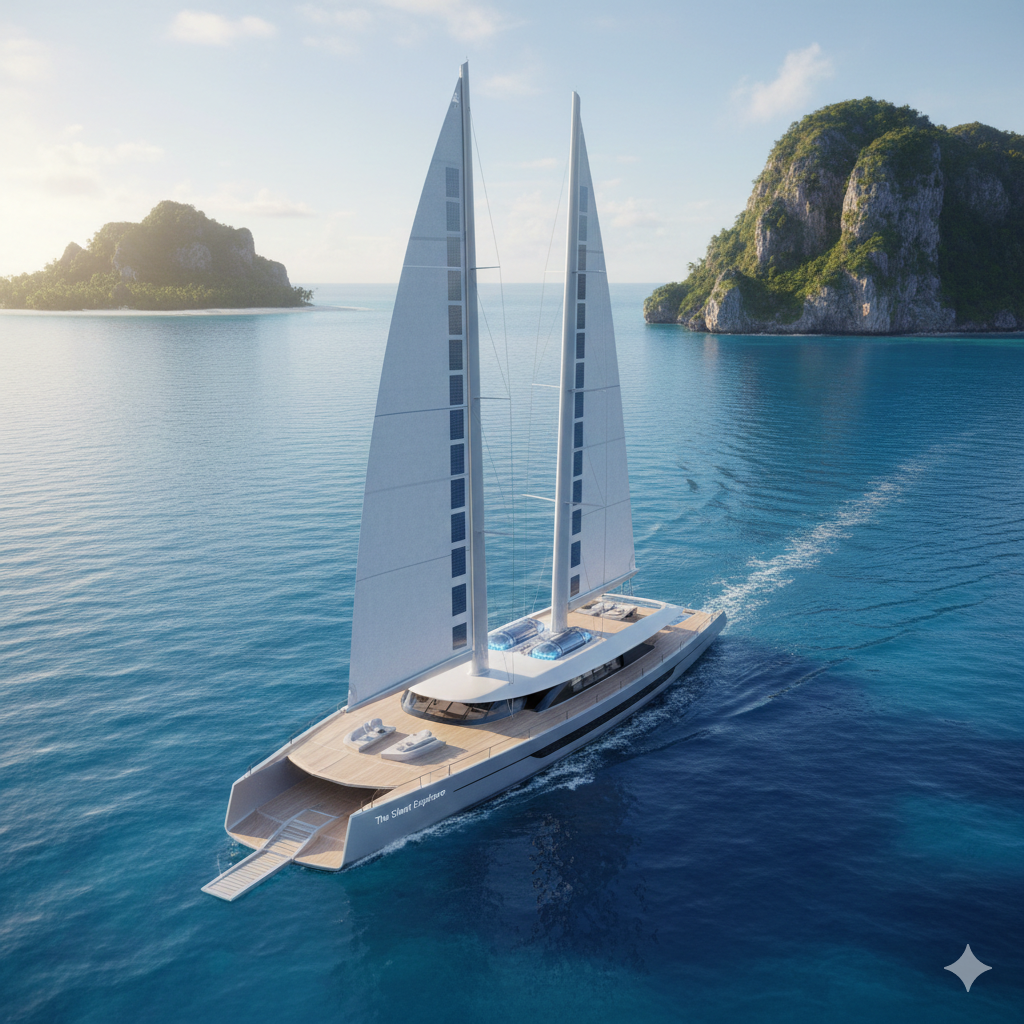
The luxury travel sector is undergoing a recalibration. After years defined by scale, speed, and visibility, the market’s most affluent travelers are moving in a different direction. In 2026, a growing segment of high end tourism is embracing slow travel, prioritizing discretion, sustainability, and time over spectacle.
At the center of this shift is the quiet return of wind powered maritime travel, updated for a new era. Advanced sailing vessels, supported by hydrogen propulsion systems, are redefining how luxury exploration is conducted at sea. The result is a form of travel that combines technological sophistication with near silence and minimal environmental impact.
This is not a nostalgic revival. These vessels bear little resemblance to traditional sailboats or conventional cruise ships. They are highly engineered platforms equipped with automated sail systems capable of adjusting in real time to wind conditions. When wind alone is insufficient, hydrogen fuel cells provide supplemental power, allowing for uninterrupted movement without carbon emissions.
From a newsroom perspective, demand for these vessels has accelerated among travelers seeking privacy and access rather than scale. Capacity is intentionally limited. Routes are carefully selected. The appeal lies in reaching fragile coastlines and remote archipelagos without the noise, pollution, or visibility associated with large cruise operations.
Shipbuilders have responded accordingly. Competition in the sector is no longer focused on maximizing onboard amenities or passenger volume. Instead, emphasis has shifted toward energy efficiency, material innovation, and self sufficiency. Sails themselves are becoming multifunctional, incorporating solar collection and advanced materials that enhance performance while reducing drag.
For operators, this technology unlocks itineraries that were previously restricted. Sensitive marine environments, once inaccessible to traditional vessels, are now reachable under stricter environmental guidelines. The ability to operate quietly and with minimal footprint has become a commercial advantage.
The onboard experience reflects this change in philosophy. Slow travel at sea is defined by duration rather than distance. Voyages spend more time in fewer locations, encouraging deeper engagement with destinations. The absence of engine noise transforms the atmosphere, replacing mechanical hum with natural sound.
This quieter environment has resonated with travelers increasingly focused on wellness and mental recovery. The journey itself becomes part of the experience, rather than a means to an end. In this model, luxury is expressed through restraint.
The implications extend beyond maritime travel. The technologies being refined aboard these vessels are influencing the broader hospitality industry. Energy systems designed for autonomous operation at sea are being adapted for remote resorts and boutique developments on land. Water generation, waste management, and energy storage solutions tested in maritime conditions are finding new applications ashore.
From an investment standpoint, the sector reflects a broader maturation of luxury markets. Sustainability is no longer treated as a branding exercise. It is becoming a structural requirement. Projects that fail to address environmental impact face increasing resistance from both regulators and customers.
This shift also aligns with changing perceptions of status. Visibility is no longer the primary signal of exclusivity. In an age of constant exposure, discretion has become valuable. Wind powered luxury travel offers both physical and digital distance, an increasingly rare combination.
The return to sail is therefore less about technology than intent. It reflects a desire to move through the world without dominating it. To explore without announcing arrival. To travel without leaving a trace.
As 2026 progresses, the most sought after journeys are not those defined by speed or scale, but by silence and access. In that sense, wind powered luxury travel is not a retreat from progress. It is an expression of where progress has led.