

Close Menu
Briefory
    What's Hot

    The Sovereignty of the Self in an Age of Algorithmic Governance

    13.02.2026

    The Chronos Strategy and the Death of the Always-On Executive Culture

    13.02.2026

    Direct Indexing and the Democratization of Tax-Loss Harvesting for High-Net-Worth Portfolios

    13.02.2026
    Facebook X (Twitter) Instagram
    Trending
    • The Sovereignty of the Self in an Age of Algorithmic Governance
    • The Chronos Strategy and the Death of the Always-On Executive Culture
    • Direct Indexing and the Democratization of Tax-Loss Harvesting for High-Net-Worth Portfolios
    • The Fragmentation Gamble and the Rise of Issue-Based Partnerships in the Global South
    • The Polycentric Shift and Why American Transactionalism is Redefining Global Power Dynamics in 2026
    • The Neuro-Symbolic Pivot and Why Pure Neural Networks are Reaching a Reasoning Ceiling
    • Trans-Arctic Cable Initiative Gains Momentum Amid Strategic Rivalry
    • Beyond Silicon and the Commercial Viability of Diamond-Based Power Electronics
    Facebook X (Twitter) Instagram
    BrieforyBriefory
    Sunday, April 19
    • World
      • Americas
      • Europe
      • Asia-Pacific
      • Africa
      • Middle East
    • Economy & Business
      • Global Economy
      • Real Estate
      • Startups
    • Finance & Markets
      • Stock Market
      • Crypto & Web3
      • Commodities
      • Forex
    • Health & Biohacking
      • Longevity
      • Mental Wellness
      • Medical Breakthroughs
    • Lifestyle & Luxury
      • High-End Travel
      • Sustainable Living
      • Work-Life Balance
    • Personal Finance
      • Global Tax & Equity
      • Retirement Planning
      • Wealth Management
    • Perspectives
      • Expert Briefings
      • Future Trends
      • Global Opinions
    • Tech & AI
      • Artificial Intelligence
      • Cyber Security
      • Future Tech
    • The Brief
      • Daily Briefings
      • Tech Radar
      • Deep Dives
    Briefory
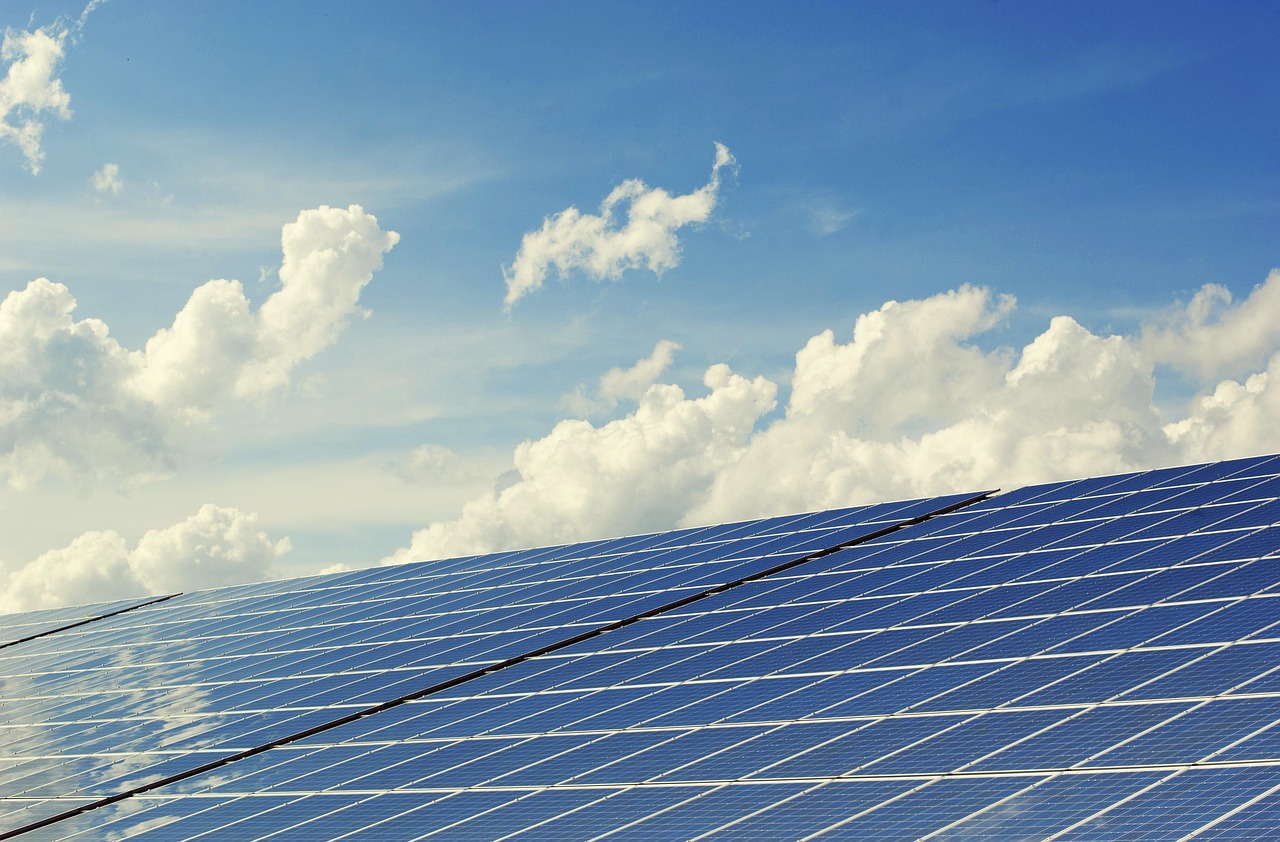
    Solar panels and transmission lines supply power to communities in Africa.

    Africa turns to renewables to cut power shortages and fuel imports

    0
    By Newsroom on 26.01.2026 Africa, World
    Share
    Facebook Twitter LinkedIn Copy Link

    Africa is moving toward a green energy transition for reasons that are more practical than ideological. Power shortages remain one of the biggest constraints on growth. Fossil fuel imports drain foreign exchange. Large parts of the continent still lack access to reliable electricity. Renewable energy is increasingly the fastest and cheapest way to close that gap.

    The shift is already under way. Solar and wind capacity has expanded sharply over the past decade, starting from a low base. Utility scale solar projects now operate across North Africa, Southern Africa and parts of East Africa. Off grid and mini grid systems are spreading in rural areas, often faster than national grids can extend.

    Cost is the main driver. Solar and wind prices have fallen to levels that undercut diesel generation, which remains widespread across the continent. For governments and businesses, renewables reduce exposure to fuel price shocks and currency pressure. For households, they offer access where grid connections are slow or unreliable.

    North Africa is leading in scale. Morocco has invested heavily in solar and wind to cut energy imports and position itself as a power exporter to Europe. Egypt has expanded renewables alongside gas, using large projects to stabilise supply and attract investment. Both combine strong state planning with access to finance and transmission infrastructure.

    Sub Saharan Africa shows a different pattern. South Africa is accelerating renewable procurement after years of power shortages. Kenya already sources most of its electricity from renewables, led by geothermal and wind. Namibia and Botswana are positioning themselves as solar exporters and green hydrogen hubs, targeting future demand from Europe and Asia.

    Green hydrogen is the next frontier. Several African governments have signed agreements with foreign partners to develop large scale hydrogen projects based on renewable power. These projects are capital intensive and long term, but they reflect a strategic bet. Africa has land, sun and wind. If transport and storage costs fall, it could become a major supplier of clean fuels.

    The economic implications are significant. More reliable and cheaper power would lift manufacturing, mining and services. It would reduce reliance on generators, which act as a hidden tax on African businesses. It would also create new export sectors, from green fuels to carbon linked commodities.

    The transition is not without risk. Financing remains uneven. Many countries struggle to attract long term capital at affordable rates. Grid infrastructure is weak in large parts of the continent, limiting the ability to integrate variable renewable power. Regulatory uncertainty still deters investors in some markets.

    There is also a political tension. Several African countries are oil and gas producers that rely on hydrocarbons for revenue. They argue, with justification, that they should not be asked to abandon fossil fuels before they have delivered development. In practice, most are pursuing a dual track strategy, expanding renewables while continuing to exploit oil and gas.

    China, Europe and the Gulf states are shaping the transition. Chinese firms dominate solar manufacturing and are deeply involved in African projects. European governments and companies are focused on green hydrogen and transmission links. Gulf investors are moving into large scale renewables and energy infrastructure. This competition gives African governments more options, but also raises the stakes of negotiation.

    Access remains the core issue. Nearly half of Africans still lack electricity. Renewables alone will not solve that without policy reform, grid investment and local capacity. Off grid solutions help, but industrial growth requires reliable baseload power and transmission.

    The long term impact goes beyond energy. If Africa succeeds in building a green power base, it will alter trade patterns, industrial location and climate diplomacy. The continent would move from being seen mainly as a victim of climate change to being a supplier of solutions.


    This is not a single revolution. It is a series of national transitions moving at different speeds. Some will succeed quickly. Others will lag. What is clear is that green energy in Africa is no longer a niche experiment. It is becoming a central pillar of economic strategy, driven by necessity rather than ambition.

    Keep Reading

    Thailand Advances Land Bridge Plan as Alternative to Malacca Strait

    The Archipelagic Pivot and the Quiet Realignment of the Indo-Pacific

    Africa’s Silicon Savannah and the shift beyond traditional banking

    Asia for Asia and the reshaping of the global economic centre

    Constraint, not innovation, will decide which industries dominate the next decade

    Postwar globalisation gives way to a narrower and more political system

    Leave A Reply Cancel Reply

    Latest Posts
    Advertisement
    Demo

    Recent Posts

    • The Sovereignty of the Self in an Age of Algorithmic Governance
    • The Chronos Strategy and the Death of the Always-On Executive Culture
    • Direct Indexing and the Democratization of Tax-Loss Harvesting for High-Net-Worth Portfolios
    • The Fragmentation Gamble and the Rise of Issue-Based Partnerships in the Global South
    • The Polycentric Shift and Why American Transactionalism is Redefining Global Power Dynamics in 2026
    Facebook X (Twitter) WhatsApp TikTok Instagram

    News

    • World News
    • Politics
    • Business
    • Technology

    Company

    • Privacy & Policy
    • Editorial Policy
    • Copyright & DMCA Policy
    • Terms of Use

    Contact

    • Contact
    • About Briefory

    Stay Informed. Stay Briefed.

    Essential global news, carefully selected and delivered by Briefory

    © 2026 Briefory.com Designed & Developed by lv8 – Consulting.
    • Privacy Policy
    • Terms
    • Copyright & DMCA Policy

    Type above and press Enter to search. Press Esc to cancel.

    Your privacy settings

    We and our partners use information collected through cookies and similar technologies to improve your experience on our site, analyse how you use it and for marketing purposes. Because we respect your right to privacy, you can choose not to allow some types of cookies. However, blocking some types of cookies may impact your experience of the site and the services we are able to offer. In some cases, data obtained from cookies is shared with third parties for analytics or marketing reasons. You can exercise your right to opt-out of that sharing at any time by disabling cookies.
    Privacy Policy

    Manage Consent Preferences

    Necessary

    Always ON
    These cookies and scripts are necessary for the website to function and cannot be switched off. They are usually only set in response to actions made by you which amount to a request for services, suchas setting your privacy preferences, logging in or filling in forms. You can set your browser to block oralert you about these cookies, but some parts of the site will not then work. These cookies do not store any personally identifiable information.

    Analytics

    These cookies and scripts allow us to count visits and traffic sources, so we can measure and improve the performance of our site. They help us know which pages are the most and least popular and see how visitors move around the site. All information these cookies collect is aggregated and therefore anonymous. If you do not allow these cookies and scripts, we will not know when you have visited our site.

    Embedded Videos

    These cookies and scripts may be set through our site by external video hosting services likeYouTube or Vimeo. They may be used to deliver video content on our website. It’s possible for the video provider to build a profile of your interests and show you relevant adverts on this or other websites. They do not store directly personal information, but are based on uniquely identifying your browser and internet device. If you do not allow these cookies or scripts it is possible that embedded video will not function as expected.

    Google Fonts

    Google Fonts is a font embedding service library. Google Fonts are stored on Google's CDN. The Google Fonts API is designed to limit the collection, storage, and use of end-user data to only what is needed to serve fonts efficiently. Use of Google Fonts API is unauthenticated. No cookies are sent by website visitors to the Google Fonts API. Requests to the Google Fonts API are made to resource-specific domains, such as fonts.googleapis.com or fonts.gstatic.com. This means your font requests are separate from and don't contain any credentials you send to google.com while using other Google services that are authenticated, such as Gmail.

    Marketing

    These cookies and scripts may be set through our site by our advertising partners. They may be used by those companies to build a profile of your interests and show you relevant adverts on other sites. They do not store directly personal information, but are based on uniquely identifying your browser and internet device. If you do not allow these cookies and scripts, you will experience less targeted advertising.
    Disable all Confirm my choices Allow all
    Verified by ConsentMagic
    My Consent Preferences