

For much of the past century, housing design has treated health as a secondary outcome. Buildings were judged by efficiency, cost, and appearance, while well being was assumed to follow. If a space was warm, quiet enough, and structurally sound, the rest was left to medicine and personal habit. That division is beginning to erode.
A growing body of longevity research is now moving upstream, away from clinics and into the built environment. The home is becoming a site of intervention rather than a neutral backdrop. This shift is not driven by lifestyle branding or aesthetic trends. It reflects a change in how health risk is understood and managed over time.
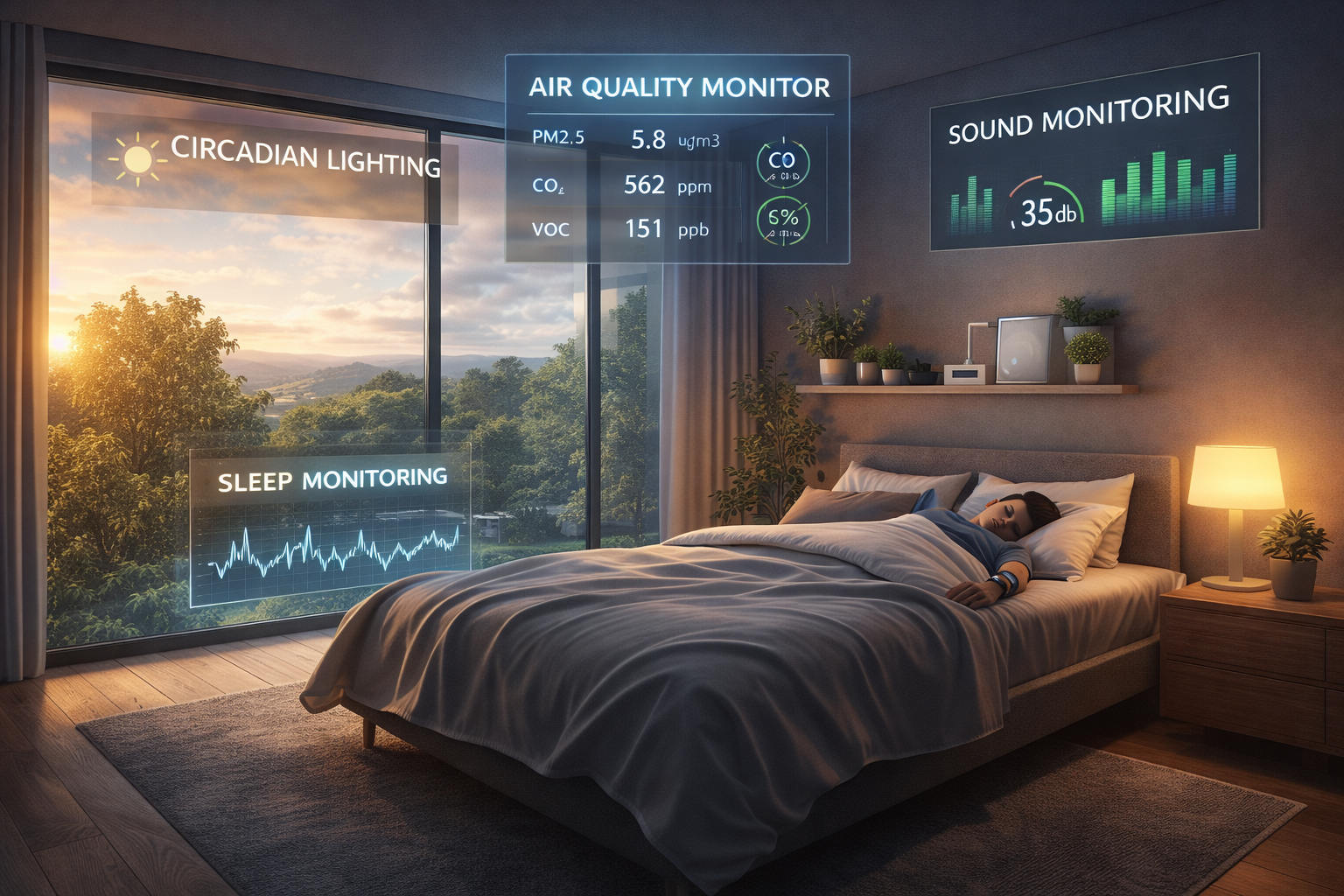
Longevity science has focused increasingly on chronic exposure rather than acute illness. Air quality, light cycles, sound levels, and thermal variation are now measured not as comfort factors but as inputs that accumulate biological effect. Housing, by definition, concentrates exposure. People spend more time indoors than in any other setting. The home shapes daily rhythms in ways that are repetitive and difficult to offset.
Developers and architects have begun to respond by embedding these findings directly into design specifications. Ventilation systems are calibrated for particulate control rather than basic airflow. Lighting plans are mapped to circadian timing rather than uniform brightness. Acoustic treatments address low level background noise that previously went unmeasured. Materials are selected with attention to off gassing profiles and long term indoor chemistry.
These choices are not uniform or standardized. They appear first in high end residential projects, research driven housing pilots, and retrofits commissioned by health focused owners. What connects them is a reframing of value. The home is no longer optimized solely for resale or energy performance. It is increasingly positioned as a risk management environment.
This framing alters responsibility. In traditional housing, health outcomes were externalities. If a resident developed respiratory issues or sleep disruption, the cause was treated as personal or environmental but rarely architectural. Bio harmonic design blurs that boundary. When spaces are deliberately tuned to biological markers, design decisions carry implied accountability.
This accountability remains informal. Building codes have not shifted in step with longevity research. Regulatory thresholds still reflect safety minimums rather than exposure optimization. Yet within private development, informal standards are emerging. Air change rates are specified beyond code. Daylight access is modeled with greater precision. Noise attenuation is tested rather than assumed.
The financial implications are subtle. These features increase upfront cost but promise longer term returns in durability, occupancy stability, and perceived quality. Unlike energy efficiency, the benefits are not easily quantified in utility savings. They appear instead in retention, renovation cycles, and, increasingly, in health data collected within the home.
Sensors play a quiet role in this transition. Indoor air monitors, sleep tracking systems, and environmental controls generate continuous feedback. While marketed as convenience, they also create a record of exposure. Over time, this data begins to shape design norms. Spaces that correlate with better metrics gain credibility. Others invite adjustment.
There is a governance tension here. Health data gathered in domestic settings sits uneasily between private choice and institutional interest. Developers are cautious about liability. Residents are often unclear about data ownership. Insurers observe from a distance. No single actor has assumed full responsibility, but the architecture itself is becoming part of the health conversation.
An uncomfortable aspect of this shift is its uneven access. Bio harmonic design is not yet a mass standard. It appears where capital, land flexibility, and technical expertise align. In many markets, basic housing quality remains unresolved. The incorporation of longevity science risks widening an already visible gap between housing as shelter and housing as health infrastructure.
Still, the direction is consistent. Longevity research continues to emphasize environment over intervention. Housing professionals, in turn, are adapting their language and metrics. The home is discussed less as a finished object and more as a system that modulates exposure over decades.
This does not imply a deterministic view of health. Design does not replace behavior or medicine. But it does reshape the baseline. By altering daily conditions that were once taken for granted, the bio harmonic home changes what is considered normal exposure.
The shift matters not because it promises longer life, but because it redistributes responsibility. Health moves partially into walls, windows, ducts, and layouts. Longevity becomes something designed for quietly, through planning documents and material choices, long before outcomes are measured.