

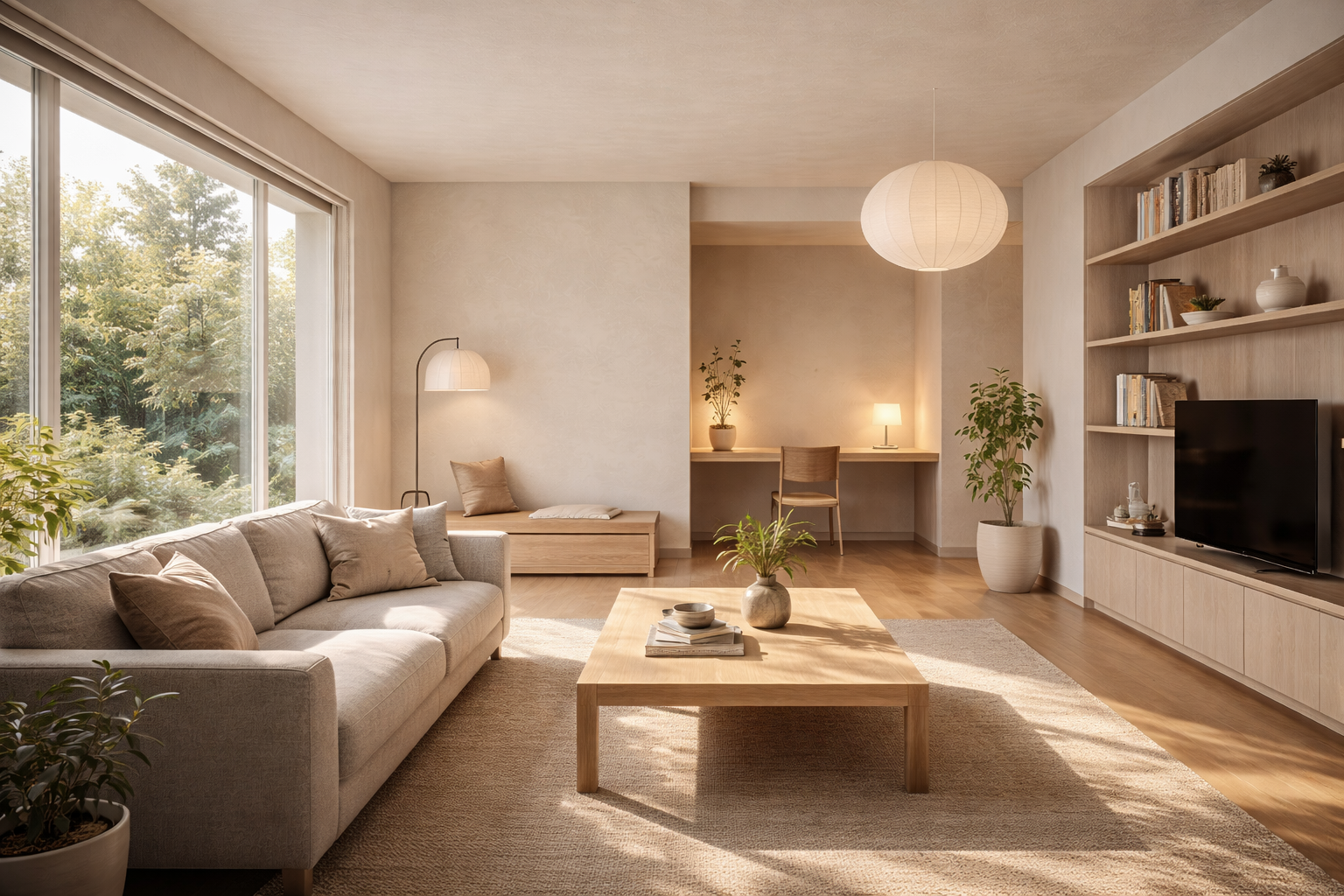
Digital minimalism has typically been discussed as a personal discipline. Fewer apps, fewer alerts, fewer hours spent scanning screens. What is changing more quietly is where this discipline is being applied. The focus is moving away from individual behaviour and into the spaces that shape it. Architecture is becoming an active participant in the management of attention.
This shift reflects a growing recognition that cognitive load is not distributed evenly across environments. Homes and workplaces now host an expanding range of digital functions, often without clear boundaries. Screens have multiplied, notifications travel across rooms, and work signals linger well beyond formal hours. In this setting, restraint is no longer only a matter of will. It becomes a question of design.
Architects and developers are responding by treating attention as a finite resource that can be conserved or depleted through spatial decisions. This is visible in the growing emphasis on zones that limit digital interference. Rooms are differentiated not only by function but by their tolerance for connectivity. Some spaces are deliberately insulated from screens and signals. Others concentrate digital activity rather than allowing it to spread.
The change is subtle. There are no dramatic departures from familiar layouts. Instead, there is a recalibration of thresholds. Visual interruptions are reduced through sightline control. Acoustic buffering is used to dampen the low level noise generated by devices. Lighting is adjusted to support sustained focus rather than constant stimulation. These choices are small in isolation, but cumulative in effect.
This approach redistributes responsibility for attention management. In earlier phases of digital expansion, the burden fell largely on users. If distraction increased, it was framed as a failure of discipline. Digital minimalism, when embedded in architecture, shifts part of that burden to designers, developers, and institutions. The environment itself is expected to assist in regulating cognitive demand.
Workplaces offer a clear example. Open plans were once justified as engines of collaboration and transparency. Over time, their impact on concentration became harder to ignore. The response has not been a full return to enclosed offices, but a layering of spatial cues. Quiet rooms, device free areas, and visually sheltered desks are integrated alongside collaborative zones. The office becomes a map of attentional states rather than a single mode of operation.
Housing follows a similar pattern, though with different constraints. As remote work and digital leisure merge, the home absorbs functions that were once external. Kitchens host meetings. Bedrooms double as media hubs. In response, residential design increasingly separates restorative spaces from digitally dense ones. Bedrooms are positioned away from primary device zones. Living areas are designed to accommodate both connection and withdrawal without constant overlap.
This evolution is supported by changes in measurement. Attention and cognitive load are no longer abstract concepts. They are tracked through sleep data, usage patterns, and environmental sensors. While this data is often marketed as personal insight, it also informs design practice. Spaces that correlate with reduced disruption gain credibility. Over time, these correlations influence standards and expectations.
There is a governance dimension to this development. As environments take on a role in managing attention, questions of agency emerge. Who decides which spaces should restrict connectivity. In workplaces, these decisions intersect with productivity metrics and surveillance concerns. In homes, they touch on autonomy and control. The architecture of calm can easily become an architecture of constraint if its logic is imposed rather than negotiated.
An uncomfortable aspect of this trend is its uneven availability. Spaces designed for cognitive restraint often appear first in premium developments and well resourced institutions. In more constrained settings, digital saturation remains a default condition. This creates a divide between environments that actively protect attention and those that leave it exposed. The difference is not always visible, but it is felt over time.
Digital minimalism, when translated into architecture, also alters how value is defined. Calm becomes a feature that can be specified, marketed, and priced. This risks turning cognitive relief into a commodity rather than a baseline condition. At the same time, it reflects a broader shift in how environments are evaluated. Comfort is no longer limited to temperature and sound. Mental load has entered the calculus.
The architecture of cognitive calm does not eliminate distraction. It moderates its presence. It acknowledges that digital systems are unlikely to recede, but that their spatial expression can be shaped. By embedding restraint into walls, layouts, and thresholds, attention is treated as something that can be supported structurally rather than managed continuously by individuals.
What remains unresolved is where the balance should sit. As design absorbs more responsibility for mental states, the line between support and control becomes less clear. The spaces being built today do not resolve this tension. They make it visible. In doing so, they signal a shift in how attention is understood, not as a purely personal challenge, but as an environmental condition shaped long before a device is switched on.