

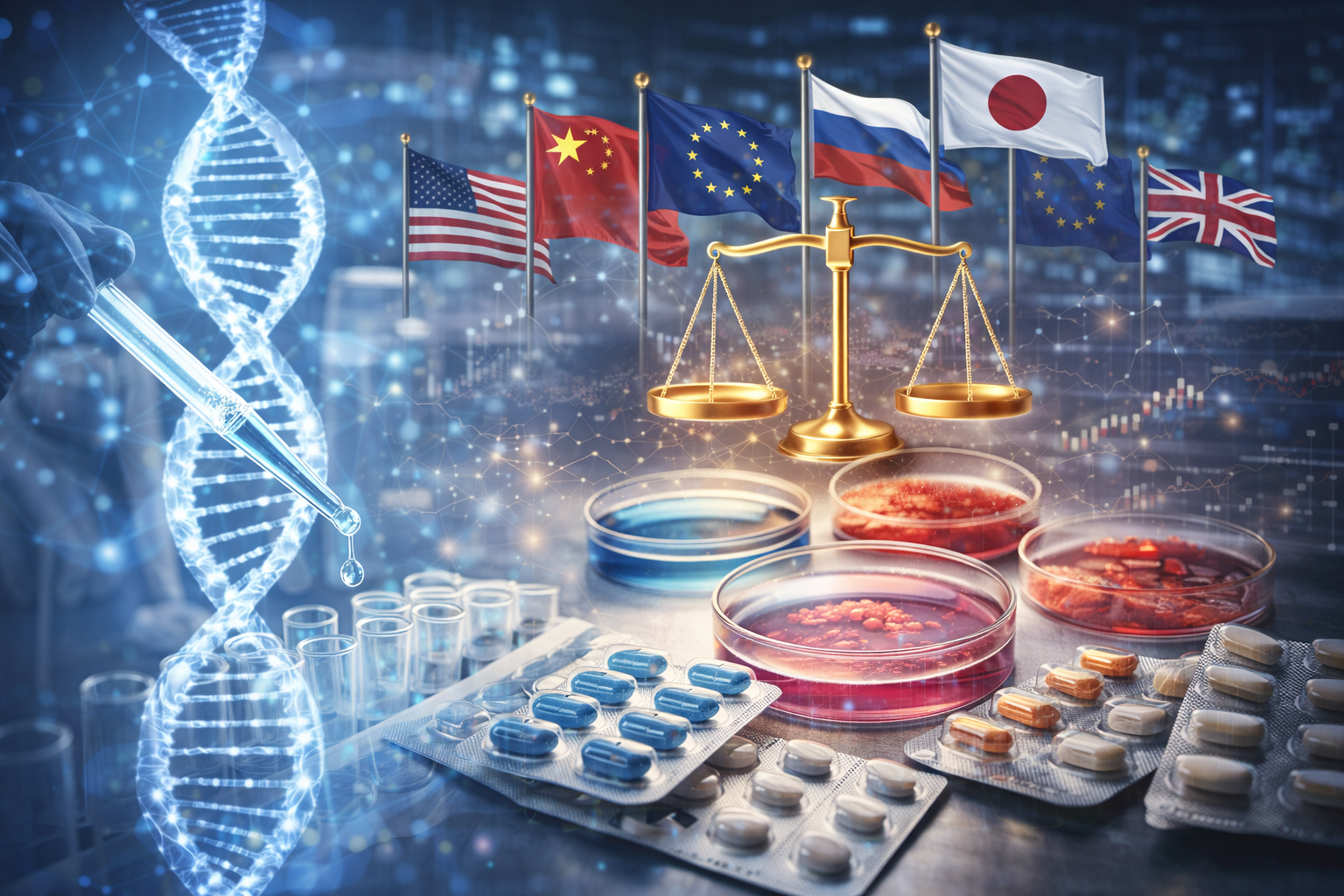
Biotechnology has moved beyond the boundaries of healthcare policy and research funding. It is now treated, in many capitals, as a strategic asset that carries economic, security, and diplomatic weight. This shift is not announced loudly. It shows up in budget lines, export controls, procurement rules, and the quiet reclassification of medical capabilities as matters of national interest.
The change is partly structural. Modern biotechnology sits at the intersection of data, manufacturing, and population health. Control over genomic databases, vaccine platforms, and advanced therapies confers leverage that is not easily replicated. These assets are slow to build and difficult to substitute. As a result, governments are beginning to see biotechnology less as a sector and more as infrastructure.
Public funding patterns reflect this view. States are directing capital toward domestic biomanufacturing capacity, not only for resilience but for influence. Facilities that once served local health systems are now framed as strategic reserves. The language of preparedness has expanded to include supply assurance for allies and selective access for others. This is not a return to Cold War science policy, but it echoes similar instincts.
Regulation is another signal. Approval pathways, data sharing rules, and intellectual property protections are being adjusted with geopolitical considerations in mind. Some jurisdictions are tightening controls on outbound research collaboration. Others are accelerating approvals for domestic firms while maintaining stricter standards for foreign entrants. These moves are rarely described as protectionist. They are justified as risk management.
Trade policy has followed. Biotechnological inputs, from reagents to specialised equipment, are increasingly subject to export review. Licensing decisions carry strategic overtones. Access can be delayed or conditioned. Over time, this shapes global supply chains. Companies adapt by regionalising production and research. The market fragments, even as scientific collaboration remains global in spirit.
The soft power dimension is more subtle. Countries with advanced biotech capabilities can offer assistance during health crises. Vaccines, diagnostics, and treatment protocols become instruments of diplomacy. Distribution choices matter. So do timelines. The ability to respond quickly confers credibility. In some cases, it also creates dependency. This is rarely stated openly, but it is understood by those managing these programs.
Harder forms of power are present too. Health data has security implications. Large scale genomic information can inform public health planning, but it also raises concerns about surveillance and misuse. States are becoming more cautious about where data is stored and who can access it. Data sovereignty, once a niche concept, is now part of mainstream policy discussion.
Industry is adjusting to this environment. Biotech firms are navigating a landscape where commercial success is intertwined with national strategy. Funding sources come with expectations. Market access can depend on alignment with domestic priorities. This complicates corporate governance. Decisions that once turned on scientific merit or market demand now carry political weight.
There is an uncomfortable tension here. Biotechnology thrives on openness. Research advances through shared data and cross border collaboration. Strategic framing introduces friction. Some scientists express concern privately about barriers creeping into their work. Others adapt, focusing on partnerships that fit within new boundaries. The system absorbs the pressure, but not without cost.
Allies are coordinating, but coordination is uneven. Shared standards and joint investments exist alongside competition for talent and intellectual property. Trust is situational. It deepens in some areas and erodes in others. This unevenness is part of the current phase. It reflects the absence of a settled model for managing biotechnology as both a public good and a strategic resource.
Markets are beginning to price these dynamics. Valuations reflect not only pipelines and trial results but also jurisdictional exposure. Firms operating across multiple regulatory regimes face higher uncertainty. Those anchored in supportive national frameworks appear more stable. This does not eliminate risk. It shifts its source.
The consequences extend beyond industry. Health systems themselves become sites of strategic concern. Access to advanced therapies is influenced by national capacity and international relationships. This raises questions about equity that remain largely unresolved. The gap between what is technically possible and what is widely available persists.
One detail is easy to miss. Much of this repositioning happens through administrative processes rather than legislation. Committees, guidelines, and procurement decisions do the work. There are few dramatic moments. The change accumulates. Over time, biotechnology settles into the same category as energy or telecommunications. Essential, contested, and politically sensitive.
This does not mean that science is subordinated entirely to power. Research continues. Breakthroughs still emerge from unexpected places. But the environment around them has changed. The framing of biotechnology now includes questions of influence and control that would have seemed out of place a decade ago.
The result is a field pulled in several directions at once. It remains a source of medical progress and economic growth. It is also a lever in international relations. Balancing these roles is proving difficult. The tension is not yet resolved. It sits quietly within policy choices, shaping outcomes without demanding immediate answers.